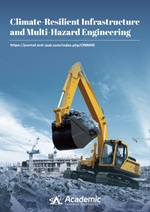
Launch of Climate-Resilient Infrastructure and Multi-Hazard Engineering (CRIMHE)
We are pleased to announce the launch of a new international journal, Climate-Resilient Infrastructure and Multi-Hazard Engineering (CRIMHE). This pioneering journal is dedicated to advancing the science, engineering, and policy required to build and maintain infrastructure capable of withstanding the growing threats posed by climate change and multiple, often interacting, hazards.
Our Mission and Core Vision
The intensification of extreme weather events, shifting climatic patterns, and the complex interplay of natural hazards—such as floods, storms, earthquakes, heatwaves, and coastal erosion—present unprecedented challenges to global infrastructure systems. CRIMHE is founded on the imperative to bridge critical knowledge gaps and foster innovative, cross-disciplinary solutions that enhance resilience, sustainability, and safety.
Our core philosophy is rooted in the integration of climate adaptation with multi-hazard engineering. We believe that the future of civil and infrastructure engineering lies in a proactive, predictive, and holistic approach—one that moves beyond traditional single-hazard design to address the compounded risks of a changing planet.
Scope and Focus
CRIMHE provides a dedicated platform for research that spans the entire spectrum of resilience engineering, including but not limited to:
- Climate resilient civil structures and infrastructure adaptation strategies.
- Multi hazard engineering covering floods, storms, earthquakes, heat and combined events.
- Urban infrastructure risk assessment and systems adaptability under climate stress.
- Water, stormwater and hydraulic infrastructure performance in changing climates.
- Geotechnical and hydrological interactions contributing to hazard behaviour.
- Coastal protection design, shoreline management and erosion control engineering.
- Disaster modelling, vulnerability analysis and predictive hazard simulation.
- Climate adaptive materials, structural systems, digital twins and engineering policy for resilience.
A Unique Scholarly Nexus
A key advantage of CRIMHE is its role in filling a significant gap in the scholarly landscape. We aim to become the journal of choice for researchers and practitioners from civil engineering, water resources, geotechnics, climate modelling, urban planning, and related fields. This convergence ensures not only strong global demand but also significant potential for high impact and citation.
We invite the global research community to contribute their groundbreaking work to CRIMHE. Together, we can shape the principles and practices of next-generation infrastructure, making our built environment safer, more durable, and resilient for generations to come.
Submit your manuscripts and join us in this critical endeavour.