Journals
-
Forum for Economic and Financial Studies
Forum for Economic and Financial Studies (FEFS) is an international, scholarly open access journal on the topic of financial economics. It publishes theoretical and empirical research papers in economics and finance. We also welcome theoretical and econometric innovations, providing the relevance for researchers and policymakers is clearly elucidated. There is no restriction on the maximum length of the papers, we encourage scientists to publish their research in as much detail as possible.
-

AI for Social Good
AI for Social Good (ASG) is an international, open-access journal. It focuses on publishing cutting-edge AI research to address global societal challenges, advance fairness, and enhance welfare. It aims to build an academic platform connecting AI researchers, domain experts, policymakers, and non-profits to drive responsible, human-centred AI innovation. ASG welcomes global submissions with no maximum paper length and encourages detailed presentations to convey the depth and value of research.
-

Environment and Public Health Research
Environment and Public Health Research (EPHR) is a peer-reviewed, Open Access journal that publishes original research articles, review articles, and clinical studies covering all population-wide health issues. The journal serves the public health community, including epidemiologists, clinicians, toxicologists, governmental agencies, policy makers, and NGOs. The journal aims at promoting consistency in pursuing relevant scientific themes, and supporting finding dissemination and translation into practice.
-
Administrative Sciences Research
Administrative Sciences Research (ASR) is an open-access, peer-reviewed academic journal dedicated to advancing the field of administrative and management sciences through the exploration and dissemination of high-quality research. The journal provides a platform for scholars and practitioners to engage with current developments in the management, governance, and organizational behavior domains, while promoting interdisciplinary approaches that integrate diverse perspectives from across business, public administration, and organizational studies. The journal publishes articles, reviews, and short notes on topics that influence administrative practices, with a particular emphasis on organizational behavior, strategy, leadership, ethics, sustainability, and governance. By offering open access to its content, Administrative Sciences Research seeks to foster global collaboration and knowledge sharing among researchers, policymakers, and practitioners interested in the intersection of administration, management, and governance.
-
Language Exploration
Language Exploration (LE) is a peer-reviewed open-access journal dedicated to advancing interdisciplinary research in language studies. As a comprehensive academic platform, we publish high-quality original research articles, critical reviews, and theoretical discussions that investigate language as a complex cognitive system and its multifaceted roles in communication.
The journal particularly welcomes contributions that explore innovative intersections between linguistics and related disciplines, including but not limited to: cognitive psychology, computational linguistics, sociolinguistics, legal discourse analysis, biolinguistics, historical linguistics, and language-related studies in arts and epistemology. We encourage submissions from scholars, researchers, and students across these diverse fields to foster cross-disciplinary dialogue.
All published content is freely available worldwide, ensuring maximum accessibility and dissemination of knowledge. LE maintains rigorous peer-review standards while supporting emerging researchers in developing novel methodologies for language investigation.
-
Social Technologies and Digital Change
Social Technologies and Digital Change (STDC) is an international, interdisciplinary, open-access journal dedicated to exploring the interplay between social technologies and digital transformation, as well as their profound impacts on society, economy, culture, and policy. The journal focuses on topics such as sociotech theory and practice, the societal implications of digital technologies, applications of AI and big data, digital divides, and ethical issues, providing a high-level academic platform for scholars, practitioners, policymakers, and technology developers. With its interdisciplinary perspective, global outlook, practice-oriented approach, and open-access model, the journal targets professionals from academia, industry, and policy sectors. We welcome original research, case studies, and commentary articles, aiming to bridge academic insights with practical applications and contribute to building an inclusive, equitable, and sustainable digital future.
-
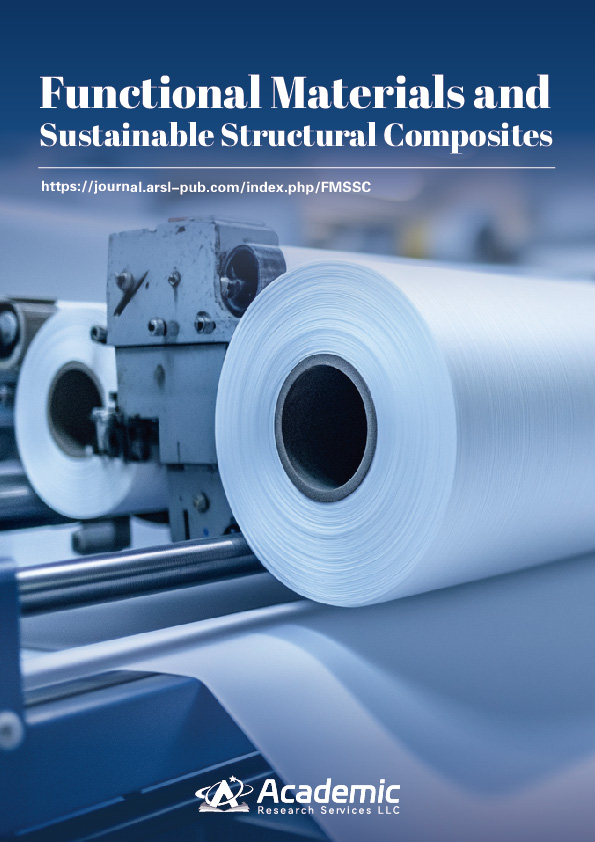
Functional Materials and Sustainable Structural Composites
Functional Materials and Sustainable Structural Composites (FMSSC) aims to promote functional, sustainable, and high-performance structural materials for engineering applications. It specialises in composites, smart materials, and durability studies. Its advantage is the very large materials engineering research community and global interest in sustainable structural solutions.
-

Agro Resilience
AR focuses on the diverse risks faced by agriculture and the scientific, technological and policy based responses that strengthen system stability. It attracts researchers studying climate impacts, pest outbreaks, economic vulnerabilities, biosecurity issues and resource related risks in food production. Its advantage lies in combining environmental science, agronomy, economics and risk analytics into a unified platform. This integrated approach supports interdisciplinary research and aligns with global priorities such as climate adaptation, food system security and risk informed agricultural planning. The title is modern, distinctive and positioned to draw a broad and sustained submission base.
-

Link
Link is dedicated to advancing research on the connections and synergies between people and systems, organizations and technologies, and policies and practices in the context of Industry 5.0. As an international, open-access publication with a rigorous peer-review process, the journal takes its name from its core proposition: Industry 5.0 is fundamentally about forging new connections—between human intelligence and machine capabilities, between organizational structures and technological infrastructures, and between regulatory frameworks and practical implementation. Link investigates how these connections operate, why they fail, and how they can be optimized to foster resilient, human-centric, and sustainable industrial transformation.
-
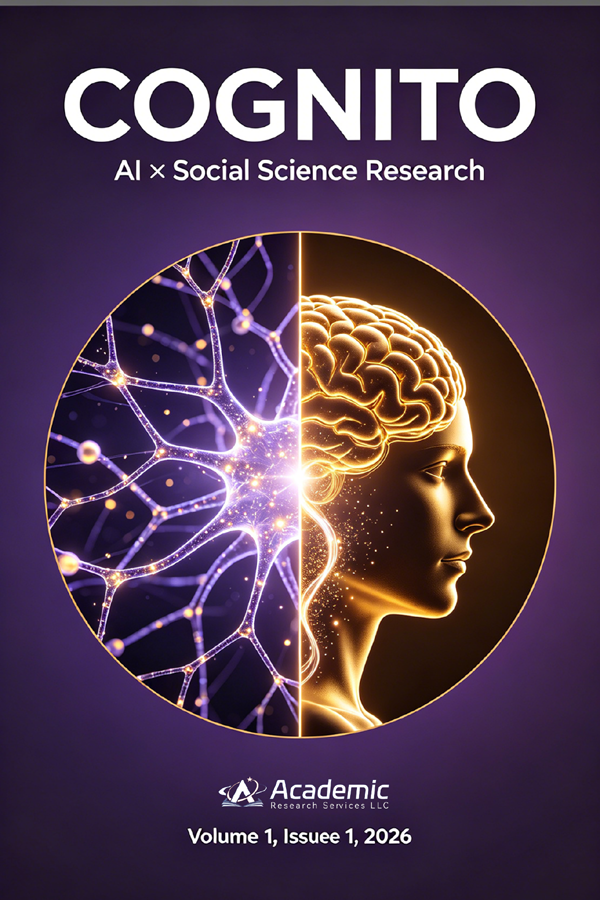
Cognito
Situated at the intersection of artificial intelligence and social science research methods, Cognito provides a critical forum for exploring the convergence of computational and interpretive approaches to understanding human behavior and social phenomena. The journal is internationally focused, peer-reviewed, and freely accessible to readers worldwide, with a name that captures its dual orientation: "Cognito" points simultaneously to AI's cognitive computing capacities and to the human cognitive processes that social scientists seek to understand. Cognito examines how AI technologies can simulate, augment, and challenge human cognition, while also interrogating the social, ethical, and methodological implications of these developments for the social sciences.
-
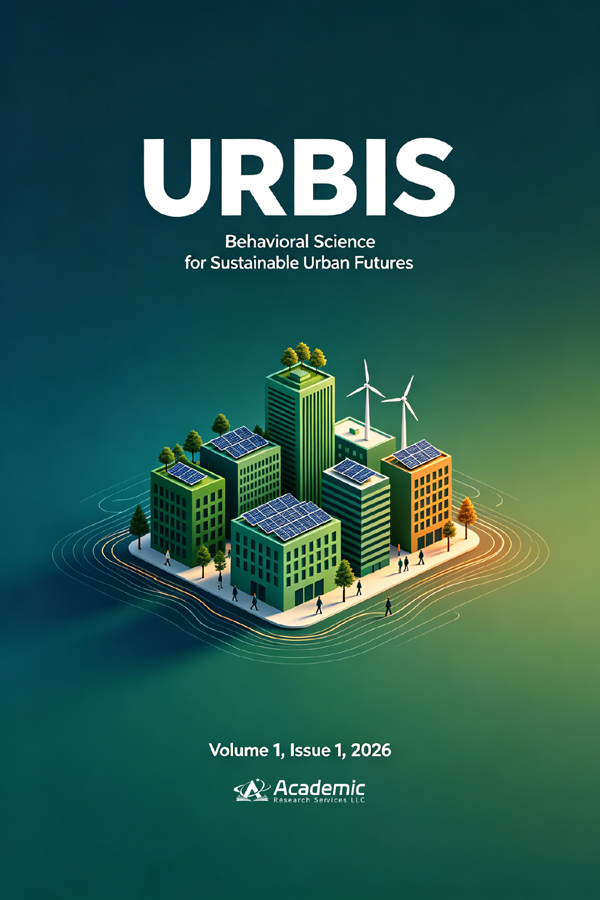
Urbis
Urbis is dedicated to advancing research on behavioral science and sustainable urban development, taking its name from the Latin word for "city" to directly signal its territorial focus: all inquiry published in the journal is situated within the urban context. As a peer-reviewed, international, and fully open-access publication, Urbis examines the dynamic interplay between human behavior and the built environment, ecological systems, and institutional frameworks that shape urban life. The journal aims to generate actionable knowledge that can inform the design, governance, and transformation of cities toward greater sustainability, livability, and equity.
-
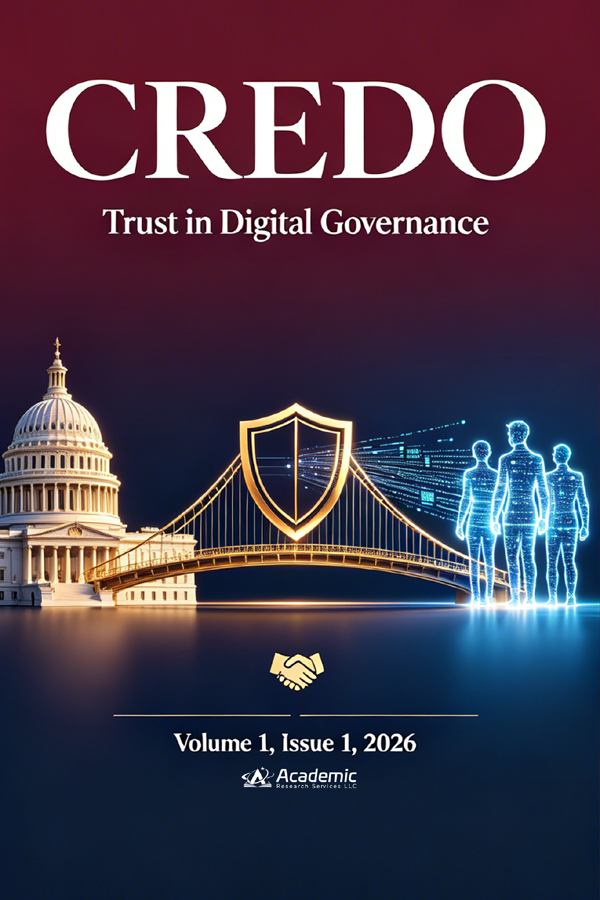
Credo
Credo advances research on digital public governance and citizen trust in government, taking its name from the Latin word for "creed" or "belief" to directly signal its core concern: trust and confidence in public institutions. The journal is internationally oriented, operates a rigorous peer-review process, and offers open access to all its content. Credo examines how digital transformation is reshaping the relationship between citizens and the state, with particular attention to the mechanisms through which trust is built, maintained, challenged, and eroded, providing a critical forum for understanding the governance of digital societies and the conditions that foster or undermine public confidence in government.
-
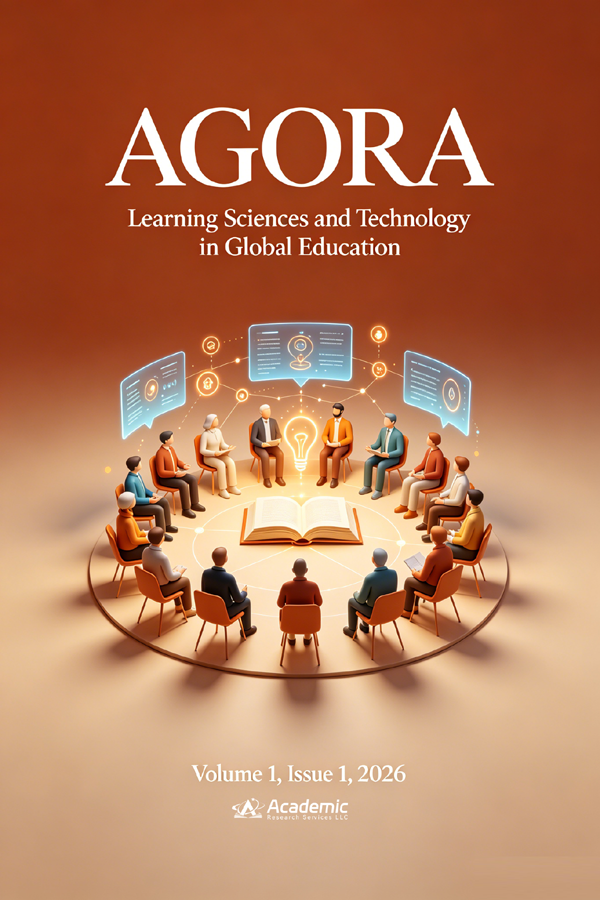
Agora
Agora is dedicated to advancing research on the learning sciences and educational technology from a global perspective, taking its name from the ancient Greek public space where citizens gathered to discuss matters of common concern. This metaphor for education as a site of exchange, dialogue, and practical transformation of ideas is central to the journal's vision: education as a public good that thrives on open intellectual exchange, critical dialogue, and the translation of research into practice. As a peer-reviewed, open-access publication with an international reach, Agora provides a platform for scholarly inquiry that bridges theory and practice, connects researchers and practitioners, and fosters cross-cultural conversations about learning and teaching.